
How to Turn Your Logo into High-Quality PVC Patches
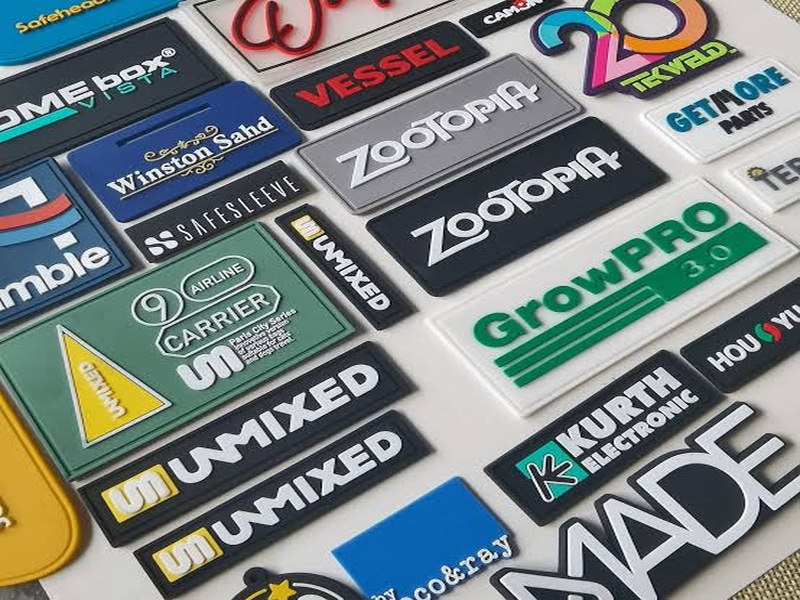
A logo should not be stuck on a screen. Making it into a molded PVC patch puts your identity into physical form that you can see, touch, wear, and remember. The process begins with clean artworks and progresses to mold planning, color separation, filling, curing, finishing and checking. The best way to transform a logo into a patch is to simply imprint a logo onto rubber. It involves adjusting the logo to fit the proportions, details, colors and use of the logo in a dimensional format. At this point, brands need to understand the whole process before approaching it.
What Are PVC Patches and Why Do They Fit Logos?
PVC patches are molded badges that are more flexible than stitched thread or printed fabric and are constructed from polyvinyl chloride. The right manufacturer knows how to showcase your brand logo, makes the mold based on the artwork, and fills the mold’s cavities with colored PVC. The resulting borders are clean, and the raised and recessed elements remain. Unlike embroidery, the design is part of the molded material, and so there is not one that can be unraveled.
This is why PVC is good for logos featuring clear geometry, prominent color blocks, and familiar shapes. Water-resistant, it is ideal for caps, jackets, backpacks, uniforms, equipment, and promotional apparel. Once the mold has been approved, the same design can be reproduced throughout future orders.
How to Determine the Right Style for Your Logo?
Not all logos are created equal. The selection of the final format depends on how it is constructed and the location to which it is destined.
2D Designs
These designs are relatively flat with raised boundaries separating the colors. They are appropriate for simple wordmarks, symbols, and corporate marks.
3D Designs
These designs use different heights to create relief. A letter, icon, mascot, or emblem can stand out from the background, leaving deeper shadows and a feeling of texture.
Mixed-Level Designs
The whole background level in this design is lower than the lettering and icon selected for a higher level. This helps to create emphasis without making all the elements compete with each other.
Restraint matters, and one should avoid making any minor item too prominent, as it may distract the reader. Good adaptation is a skill that determines what should be seen as the most important.
Why 3d Patches Are Useful Other Than Outdoor Gear?
Durability is not the only reason why 3d PVC patches are popular. There is an increasing need from businesses for items to offer as gifts after an event is over. A patch may be sewn into clothing, equipment, bags, hats, or even be incorporated into merchandise. A person in branded attire transfers the brand to another arena without forcing the promotion to be part of the brand.
Raised surfaces also offer a tactile experience that flat printing does not provide. It is ideal for sports clubs, outdoor companies, streetwear labels, hospitality brands, event planners and companies developing merchandise programs.
What Are the Possible Adaptations of Different Logos?
A website logo is not necessarily well suited for a mold every time. Gradients, hairline strokes, very fine text, shadows, or complex negative space may be present in digital artworks. There are some components that must be simplified before production.
Check letter spacing and minimum text size for wordmarks. Thin strokes should be accentuated, and circular logos may need a more defined outer line. For illustrated logos, they can be broken down into foreground, middle, and background to add depth.
Color is also vital for corporate logos. It is possible to use the specified color references, but the final color appearance will depend on the material and production conditions. It is beneficial to have a proof or physical sample before a large run.
When thinking about turning a logo into a PVC patch, the aim is not to change the identity. But the emphasis here is to make the identity translatable to material language.
How Does the Manufacturing Process of Logos Transforming into Patches Work?
The factory process actually starts much earlier than the PVC goes into a mold.
1. Artwork preparation
The manufacturer verifies the vector paths, dimensions, colors, and details that require simplification.
2. Mold Engineering
A metal mold is fabricated from the approved design. The 3D version depicts raised and recessed parts in different depths.
3. Color Preparation
PVC compounds are made in the desired colors, and each color is then allocated to a specific mold section.
4. Filling
Colored PVC is poured or injected into the relevant molded openings, sometimes layer by layer.
5. Curing
The material is made stable and flexible by controlled heat.
6. Finishing
The piece is removed from the form, trimmed, backed and checked for dimensions, color, alignment and surface defects after cooling.
That is why it is important to have artwork approved beforehand. However, once production has begun, a change in design may need a mold change.
How Can PVC Labels Further Build the Same Branding Concept?
These same design principles can transcend beyond wearable patches. 3d PVC labels are an ideal solution for placing logos on bags, products, packaging, equipment, and accessories where stitching is not a possibility.
But it is advised not to copy dimensions from one product to another. A small patch on the garment might not require as much information as a bigger label. The specification should depend on the curvature, attachment method, handling, and cleaning conditions. Use the logo as a visual resource, not a picture. This way, the recognition remains high, and every product feels custom-made.
What is the Impact of the Complexity of the Logo on Production?
Simple logos tend to be more flexible. They can work with bolder colors, more defined outlines, and more depth without losing readability. But when it comes to editing a complex logo, you must have a degree of discipline. The size of a mark, or the inclusion of details for some, can be increased or simplified if there are many small marks. That is not a failure.
If you are choosing between a readable logo and a technically accurate miniature, choose the former. Single-color logos can also be very effective. Multiple shades can be avoided by using one PVC color and raised and recessed levels. Always check the artwork at production size. The design may look appealing on the screen, but when it is small, it may be too much.
What Questions Should You Ask a Manufacturer Before Ordering?
One of the defining qualities of a good supplier is that they get back to you with answers to practical questions.
- Before the production of molds, ask if there are any digital versions of the proofs available.
- Check out appropriate fallback options and enquire about color matching. Ask if a sample is available, particularly if it is a complicated logo.
- Do not decide the quality of a patch from a photograph.
- Ask to see close-up examples of small lettering, elevated levels, color separation, and edge finishing.
How Can Coasters Enhance this Whole Strategy?
Custom PVC coasters display the versatility of the material in other industries, besides apparel. A coaster can give a logo a new life as an effective desk accessory, cafe or hospitality product, or event accessory without losing the tactile nature of molded PVC.
The logo cannot be replicated exactly in all locations. It has a recognizable feature and color relationship, which can lead to different products and core proportions. Coasters could be branded and used at tables in a restaurant. The advantage is the repetition without monotony. The identity is presented in various objects and situations to customers.
What If a Business Decides to Use a Different Approach?
There are five options for businesses to choose from. It is embroidery, woven badges, screen printing, direct garment printing, and conventional promotional products. There is a genuine reason why each method is used.
A familiar texture of a fabric is created with embroidery. Fine, flat art can be woven in various options. Photographic images and gradients work well with printing. For situations where the numbers are most important and simplicity is the key, standard giveaways might be a better option.
This distinction is therefore strategic, rather than just aesthetic. Brands that focus on durability, tactile branding, loud colors, and dimensional detail are the focus when it comes to PVC suits. The other approach might be the better one if softness, photographic reproduction, or very fine artwork is more significant. Copy the production method of the brand in a real environment, not the trend.
Why Are Businesses Going Beyond Traditional Promotional Gifts?
While traditional corporate gifts are still relevant, it is difficult to get things that can be swapped into the day-to-day lives of customers. Conventional gifts in corporates can be given tp the employees or the clients, but it does not remain memorable if they do not use it in their everyday lives.
There is another way through a well-designed patch. It can be tied to an existing product that people already use, so that the brand can go with them. They could be used to create a patch for a sports team, or a fashion brand could use them to make some clothes.
This is not an instruction to swap out all of your promotional items included in your business. The more important question is if it belongs in the audience’s world. If the object is actually used, its visibility is a side effect of its usefulness, instead of a nuisance.
FAQs
Is it possible to convert any logo into a patch-type format?
The majority of the logos can be converted into patches, but complex artwork might require some simplifying, enlarging, or reinforcing thin elements.
Do PVC patches work well for washing?
They are usually good for normal washing, but any care instructions or fixing method given on the garment must be followed.
Is it possible to outline a different shape of the PVC patch?
Yes. There are many different shapes for custom molds like shields, circles, letters, mascots, brand shapes, and more.
Do patches with logo design merely apply to clothing?
No. PVC patches can be applied to appropriate bags, equipment, accessories, labels, merchandise, and promotions.
Which file should I give to the manufacturer?
Preferably a clean vector file to guarantee accurate shapes and mold artwork are ready by the manufacturer.
To Sum Up!
Creating a quality PVC patch is not just about copying artwork. It is about accurate translation of the logo. The right solution is a balance between recognition, scale, color, relief, durability, and use. A good manufacturer can find out what parts require reinforcement before the production of molds. A well-designed and appropriately executed logo can transform into an unforgettable physical brand experience when combined with the right materials.

As a professional voice behind PVCPatchesMaker.com blogs, I focus on enhancing visibility and innovation in PVC custom products. My posts provide professional insights on material quality, design considerations, and creation techniques for brands, teams, and creators. I aim to simplify design choices, emphasizing durable, weather-resistant finishes for patches, labels, and accessories. I encourage both businesses and individuals to confidently realize unique branding ideas with PVC products that stand out and endure outdoor wear.